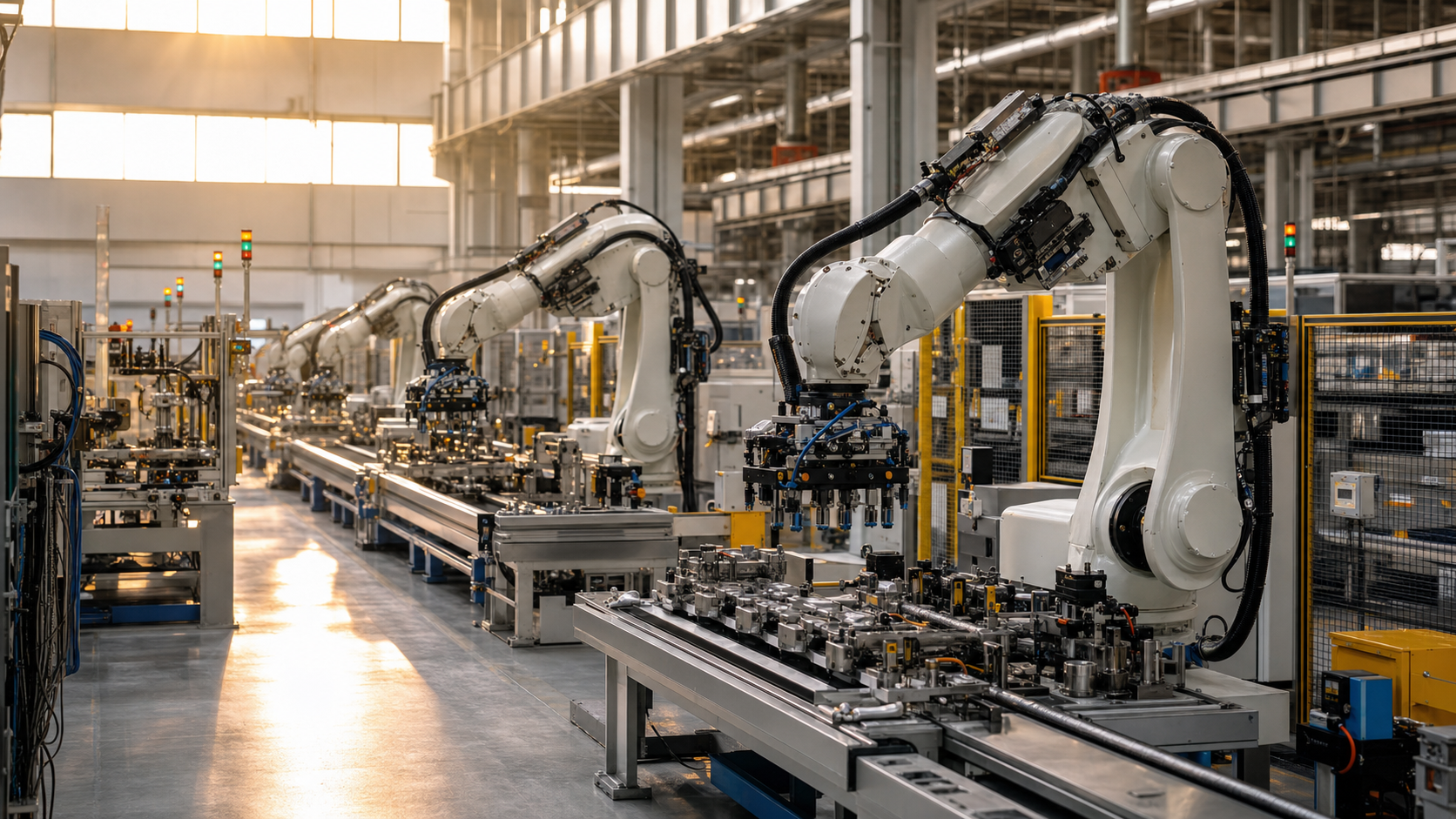
Korea’s robotics opportunity may be less about flashy demos and more about systems that keep working on real industrial floors.
It's easy to be overwhelmed by robot videos these days.
One robot runs. Another keeps its balance. Another uses its arms like a human to do work. The robots on screen look like the future has already arrived. But shift your gaze a little and a completely different question shows up: in that future, where does Korea stand?
I think this question deserves a cold-eyed look.
"Korea just needs to make a great humanoid." "We just need to build our own robotics foundation model." It's easy to say. But the moment you place this on top of industrial reality, it becomes much harder. The problem with Korean robotics today isn't simply that the technology is a step behind. The real question is figuring out, again, where we'll lose if we fight, and where we have a chance of surviving.
Korea's robotics problem can't be explained by technical capability alone
Korea has clear track records of success in semiconductors and automobiles.
But that success was generally not built on inventing a brand-new concept first. It came from implementing complex things more reliably, more precisely, and at higher quality than anyone else. To put it bluntly, Korea is less the country that opens a new game at the front, and more the country that pushes manufacturing and operational completeness to the limit on a game that's already open.
The problem is that, in robotics, many people are trying to play exactly the opposite game from the start.
One side says, "Let's mass-produce as cheaply as China." The other side says, "Let's build a general-purpose robot brain like the Americans do." But these two axes are precisely where China and the US are strongest. China dominates mass production; the US dominates general-purpose software and platforms. The moment Korea picks either one as the arena for a head-on fight, we're walking into the most disadvantageous field on our own.
The most dangerous move is to copy either China's or America's playbook outright
Stripped down, the problem is this.
Trying to win on cheap mass production is dangerous. Trying to win on generality is dangerous too.
Step into the unit-cost war and you can't beat China. Step into the general-purpose platform race, and with the United States acting as a black hole for capital and talent, it becomes extremely difficult to secure enough "cost-effective" people and capital domestically to compete with them. This isn't an emotional point — it's a structural one. Competition over the world's best general-purpose AI and general-purpose platforms tends to converge on whoever has the largest capital market and the strongest research ecosystem. Even when Korea produces excellent talent, you can't really stop the flow toward bigger stages and bigger payouts.
The same logic applies to robotics.
For Korea to step in now and declare it'll build a world-class general-purpose robotics foundation model from scratch is, in practice, almost identical to declaring it'll play the same game by the same rules as the players already best positioned to win it. You can't say outright it's impossible — but when you're discussing national-level industrial strategy, the right question isn't "can we?" It's "where can we actually win?"

Between China-style mass production and US-style general-purpose platforms, Korea may need to find a narrower but deeper path.
What Korea can be good at has one thing in common: jjam
So the question shifts. If not a head-on fight, then where can Korea win?
The keyword I keep coming back to is jjam.
The word is rough, but industrially it's pretty accurate. The jjam I mean here isn't just skill. It's know-how built up over time, manufacturing instinct that can't be cheaply copied, operational accumulation that doesn't appear just because you throw money at it.
In semiconductors, that means specific equipment and processes. In autos, it means components and manufacturing systems whose reliability has been proven over many years. These areas tend to have markets that aren't huge but aren't tiny either. They matter technically, but they aren't the kind of thing where everyone goes all-in on a head-on fight — somewhat awkwardly sized markets. That's exactly why the players with deep know-how survive there for the long haul.
What Korea should aim for in robotics looks like this. Reducers, motors, drivetrains where lifespan and reliability are critical, hardware integration tuned to specific processes, on-site optimization. In this kind of territory, the ability to make a first demo matters far less than the ability to keep the thing running without breakdown ten years later. And that's exactly where the moat forms.
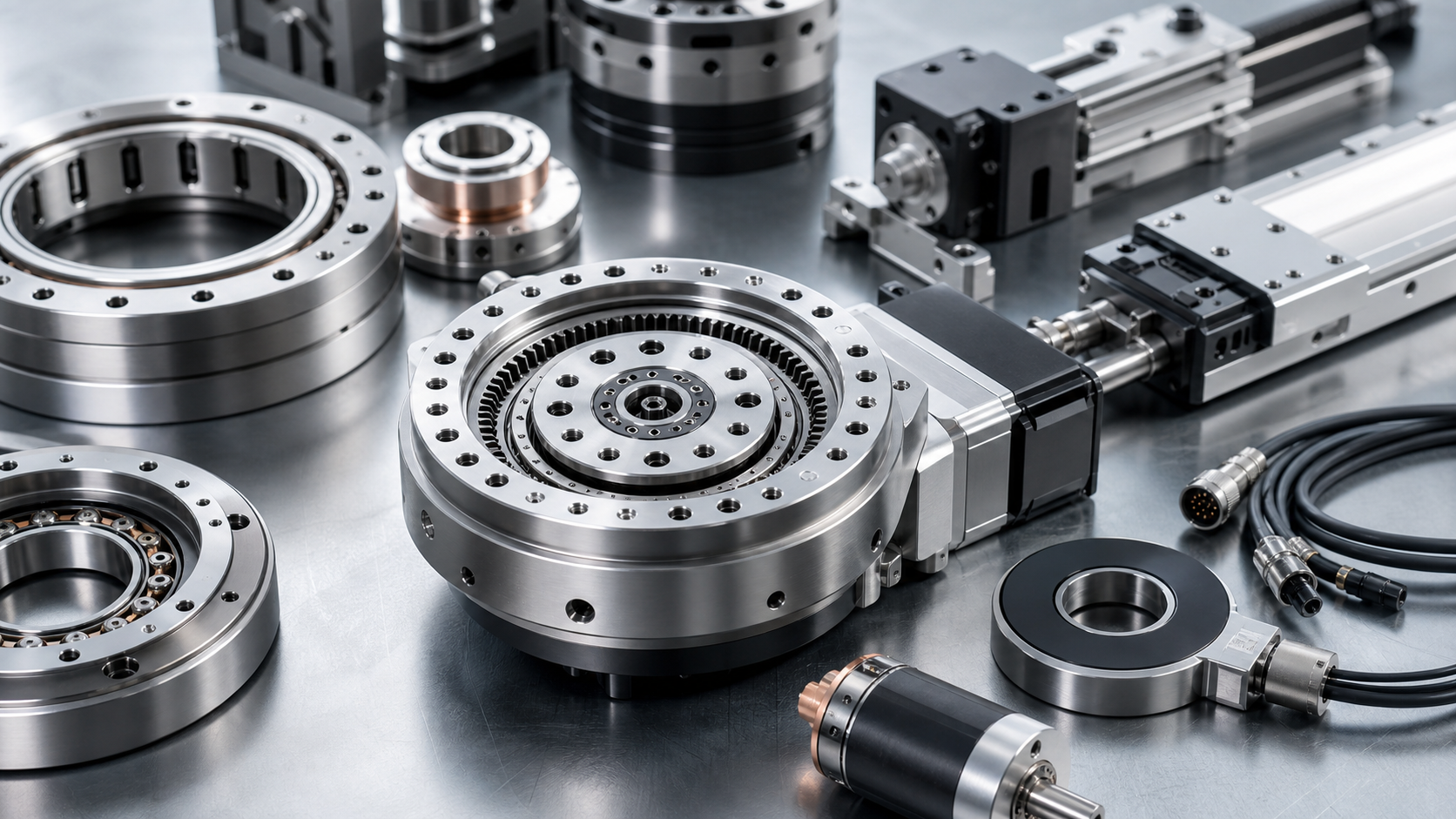
Jjam is not an abstract slogan. It shows up in reducers, motors, drivetrains, and processes that only get stronger with accumulated time.
This doesn't mesh well with a flashy startup narrative. But as national industrial strategy, it's far more realistic. "The world's first general-purpose humanoid brain" is one story. "Components and systems that don't stop running once you put them on the floor" is another — and the second one tends to keep paying for longer, and stick around longer.
In robotics software, the path is specialization, not generality
The same logic applies to software.
Lately the robotics industry has been excited about general-purpose models — robotics foundation models — that can control any hardware. The vision is undeniably compelling. But I don't think Korea should aim at generality from the start.
The reason is simple. Robotics is far more hardware-dependent than language modeling. Even for the same "behavior," every robot has different inertia, different degrees of freedom, different end-effectors, different sensors. Some have grippers, some have fingers; some are 7-axis, some are far simpler. Unlike language modeling, where there's strong OS-level standardization, the structure here is fundamentally different. Robots are far more bound to physical materiality.
So even with a general-purpose model, in practice you still need additional training and tuning for specific hardware, specific lines, and specific processes. That's exactly where Korea's opening is. Rather than building the general-purpose model itself, take a model someone else built and adapt it to domestic hardware and production lines: collect deployment data, encode on-the-floor instinct into tuning, and actually make it run.
This isn't a giant platform story. But it can be a way to actually make money. Because you have to tailor it to each customer and each process, it doesn't scale explosively. Precisely for that reason, it becomes a barrier to entry. It becomes a market that nobody else can sweep up in one move.
Robotics is still fighting "reality without data"
The decisive thing that separates robotics from other AI fields is right here.
Language models have vast text data and a relatively rich digital environment for training. Robots have to move in the physical world. And the physical world is less digitized than people think.
It's especially true on the manufacturing floor. A lot of work isn't visual-only. The feel of the hand, micro-resistance, touch, sound, habitual corrections, the body-knowledge a skilled operator carries — these decide actual work quality. Video alone doesn't capture all of this. Strapping on more sensors doesn't solve it in one shot. So robotics is, even now, an industry largely fighting against a reality short on data.
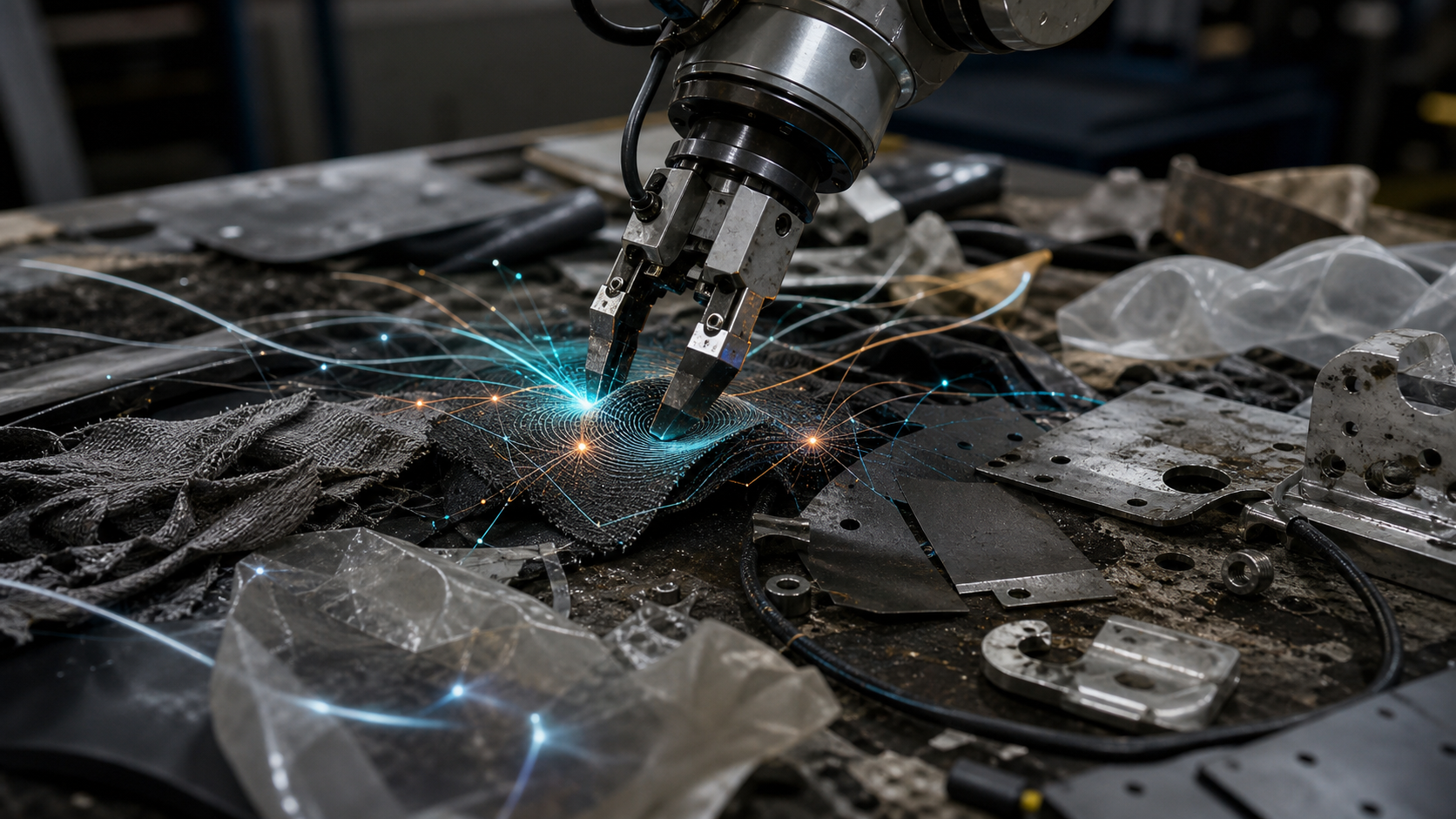
Robots do not operate on text alone. They have to deal with friction, touch, sound, variation, and the messiness of the physical world.
Which also means: a country like Korea, with accumulated experience on the manufacturing floor and inside processes, still has an opening. We may lose the all-out general-purpose model race, but in the work of using on-site know-how to fill in for the missing data, we can build a meaningful position.
The two axes left standing are jjam and security
There's one more axis worth naming. Security.
Robots aren't yet selling explosively across every industry. But defense and security are different. Unit prices are high, market size isn't massive, and above all, supply chain trust matters. You can't just plug in Chinese parts. American products may be too expensive. So between the two, Korea can be a fairly realistic supplier.
In other words, Korea's robotics strategy should look less like "let's make the world's coolest humanoid" and more like "let's make components, drivetrains, specialized systems, and on-site integration solutions that defense and industrial customers can trust." Less flashy, less romantic. But industries normally hold on by exactly this kind of work.
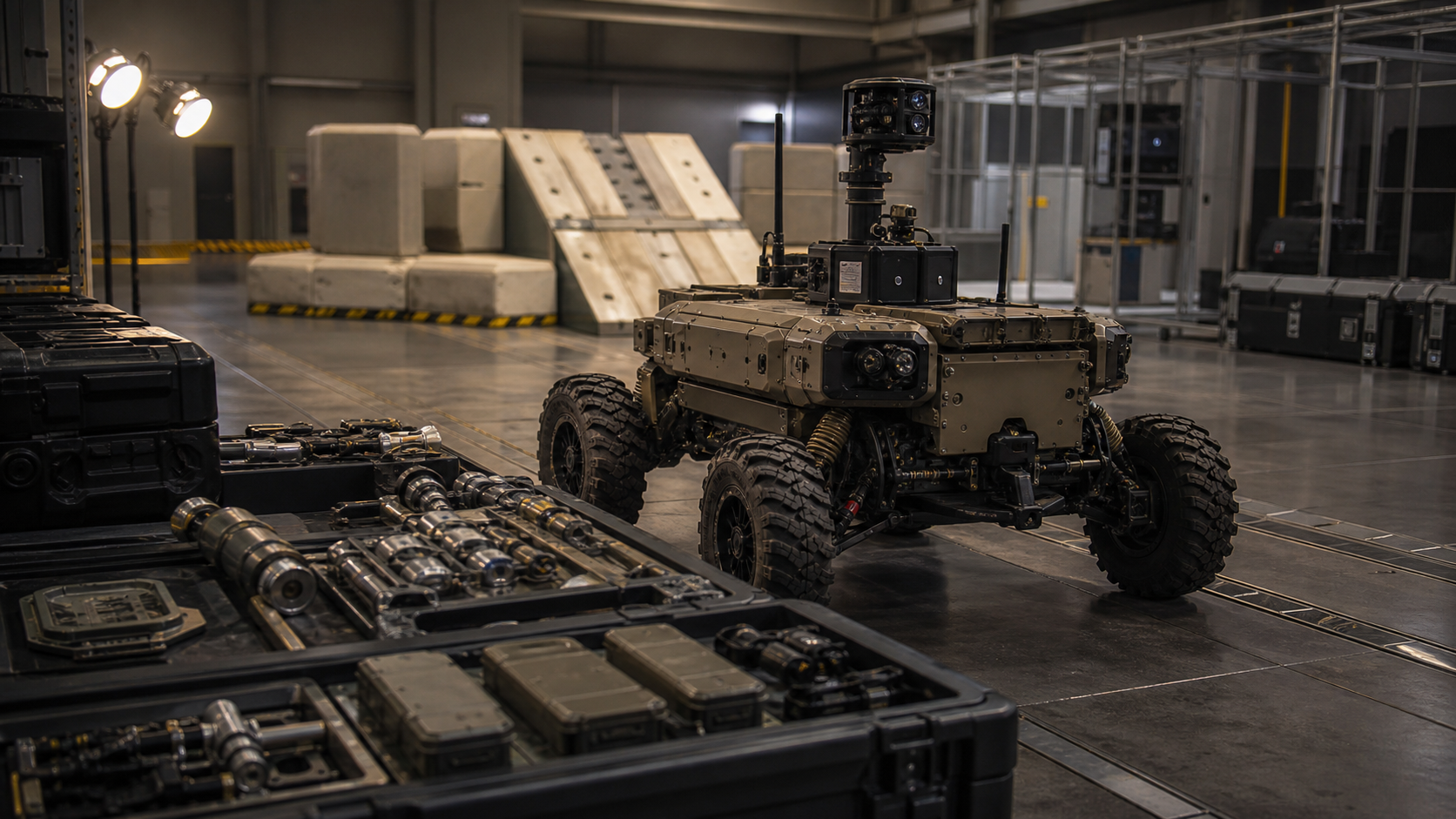
Where security and supply-chain trust matter, the winning system is not always the cheapest or the most general-purpose one, but the one people can rely on for a long time.
The future of Korean robotics is in deeper places, not wider ones
I don't want to look at Korean robotics through purely pessimistic eyes.
But to talk hope honestly, you first have to define exactly where you're going to fight. Sliding around in the middle, simultaneously imitating the game the US is best at and the game China is best at, won't last.
If Korea is to survive in robotics, we have to grab two things.
One is jjam. Time-soaked, on-the-floor know-how that doesn't copy easily. The other is security — markets where trust and supply chain stability matter more than price, even if the market itself isn't huge.
Both sit at some distance from the dazzling future narrative. But that's exactly why there's still room for Korea to walk in.
To be optimistic about the next decade of robotics, you don't need to believe Korea will build the world's best general-purpose robotics company. It's enough to believe Korea can claim positions someone has to fill but nobody else can easily replace.
That's where I see Korea's robotics future. Not the widest place — the place we can dig into the deepest. Not the flashiest place — the place we can hold the longest.