
As almost anything becomes buildable, the differentiator is no longer just the ability to make more. It is the perspective to decide what is worth seeing.
For about a month and a half, I ran an English writing learning service as a side project.
It started simply. I had been using a GPT workflow for my own English study. I would write sentences, correct them, rewrite them in more natural expressions, and review them again later. After using that flow for myself, I started thinking that it might be worth polishing into a web service.
So I built a product, ran a bit of advertising, brought in real users, and even made a little money.
It was a short period, but I learned several things.
How to build a product as quickly as possible with AI, how to test a hypothesis in the market, and how there is something more important than simply building the product itself.
Does the Problem I Want to Solve Exist in the Market?
I did not start by studying the market.
The order was almost the opposite. I built something because I personally needed it, then brought it outside into the world. English writing is such an old topic that it can easily look like an obvious problem. But an old problem is not the same thing as a solved problem.
Once I brought in real users, it became clear that this problem did exist in the market.
The people who came in had a fairly clear context: researchers, graduate students, students, office workers, and professionals. These were not simply people who “wanted to get better at English.” They were people who actually had to do something in English. They needed to write papers, prepare for studying abroad, communicate at work, and express their thoughts more precisely. And because they had to repeat this work over time, they did not want to rely only on AI. They also wanted to improve their own English ability. That distinction mattered.
What Matters Is User Experience and Retention
The clearest thing I saw during those six weeks was retention.
People were not leaving because they had no interest in English writing. The ad performance was better than the industry average, and a fairly high percentage of people completed onboarding and created accounts. The problem was that the behavior did not repeat.
Looking back, the reason is fairly clear. The product had an academically honest structure. The flow of writing sentences, correcting them, trying new expressions, and reviewing reports was genuinely helpful for improving skill.
But as a service, it was disappointing.
It required a lot of discipline from the user, and the cost of building a new habit was larger than I expected. Even “Write just three sentences” was not light inside the actual user experience. I kept refining onboarding and reduced drop-off there, but because I did not touch the core concept of the learning flow, retention stayed very low.
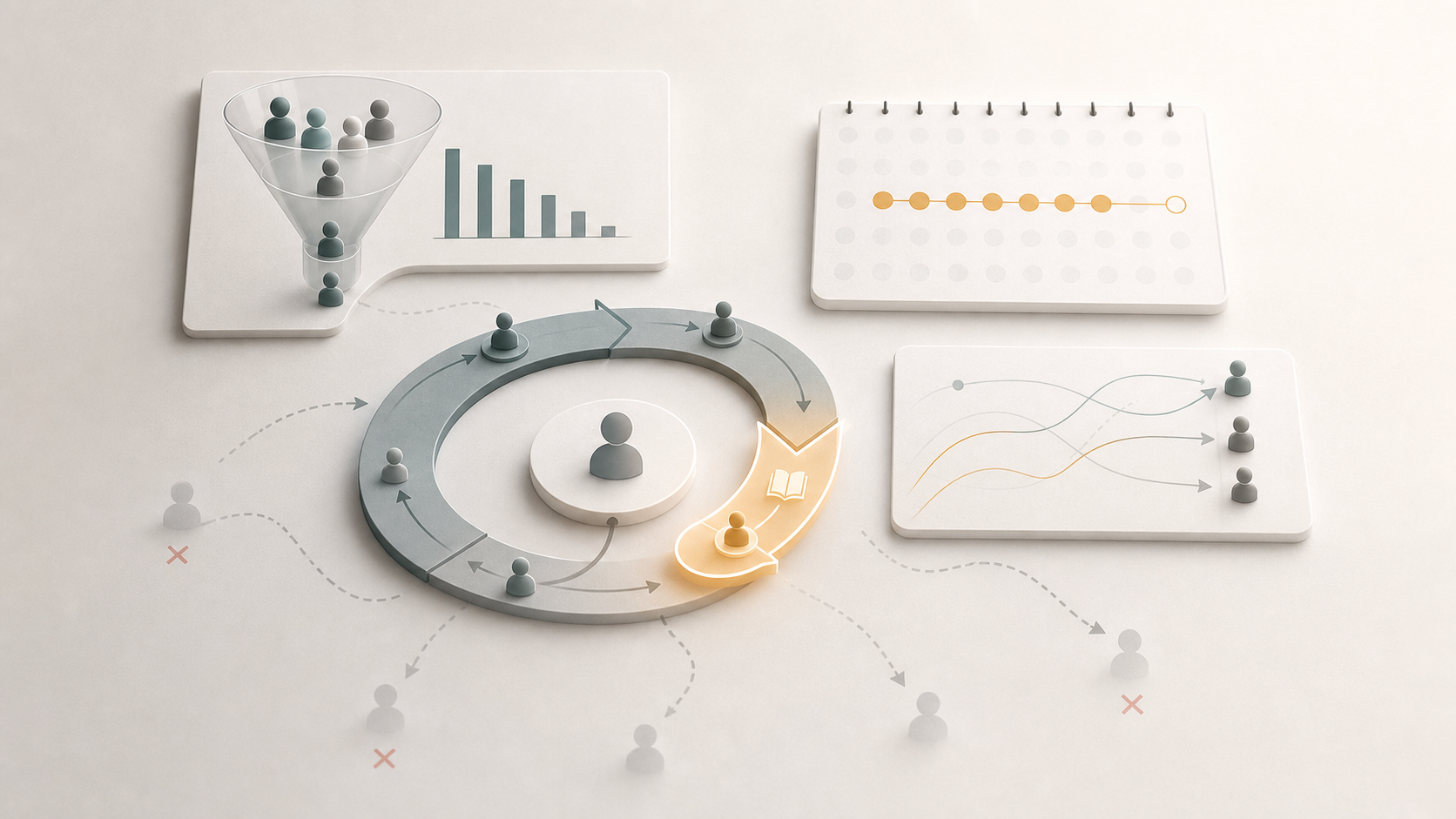
A strong learning structure alone does not create repeat usage. The product also has to design a rhythm that brings users back.
That helped me understand why services like Duolingo care so much about gamification. The core problem is not simply teaching well. It is getting people to come back. Learning outcomes alone do not create retention.
In the end, my service could not be only a good learning tool. It needed to feel lighter, open more often, and fit into a more natural interaction. Building a strong learning structure and building a product people want to keep using are different problems.
In the End, What Remains Is Perspective and Taste
Lately, I keep returning to the same hypothesis.
Building this service made me feel it more clearly: building is no longer the bottleneck. Anyone can build quickly, and even if something is not possible now, it may become possible six months later. As the cost of creation and execution falls, perspective and taste become more important.
In the past, building itself was the barrier. Turning an idea into a real product required significant time and cost, and most attempts disappeared before they even began. Now things are different. Of course, extreme polish and precision are still difficult. But most software people imagine can now be built much faster and at much lower cost than before.
What matters is that this shift is not just a productivity improvement.
For a long time, the defining question was, “Can this be built?” Now the more important questions are increasingly, “What should be built?” and “Why build that?”

As building gets cheaper, the harder question shifts from “Can this be built?” to “What should be built?”
As building becomes easier, features themselves get commoditized quickly. Anyone can build something similar. Anyone can reference what already exists. Anyone can copy a reasonable version of almost anything. That means the real differentiator moves closer to perspective and taste than to features.
By perspective, I do not mean simply having many opinions. I mean the ability to notice which problems actually matter, where something remains unsolved, and what changes are just beginning to emerge.
And taste is not just aesthetics. It is a persistent sense of what kind of product you want to build, what kinds of user experiences feel intolerable, and which problems you keep reacting to for an unusually long time.
As tools become standardized, these differences become more visible. Features can be copied, but the angle from which someone sees a problem and the intensity with which they pursue it are much harder to replicate.

Features can be copied, but the angle from which someone sees a problem and the taste they use to shape it last much longer.
This project ultimately sharpened that sense for me. Rather than making it clearer what I should build more of, it made clearer what I should not build. I am now less focused on the English writing problem itself, and more interested in why people keep returning to some tools while others end after one trial, and what form that kind of product should take in this era.
In the future, the most important skill may not simply be the ability to build. It may be the sense to know what is worth building, and the taste to decide how to give it form.
Great products are not created from functionality alone.
They are created from the way an individual, or a company, interprets the world.